Unity · Briefing · January 2028
Twenty-three signatory nations, twelve nodes, and the last leg of the backbone.
Fourteen nations at the end of 2026. Twenty-three now, each with its own accession instrument. The Arctic leg entered service this month, which closes the network the way it was drawn in 2024.
What a nation actually signs
An accession instrument has four parts. The operating mandate sets residency, retention, priority and the boundaries a workload stays inside. The schedule of functions names, function by function, what is to be carried and by which date. The audit article gives the national auditor and the relevant inspectorate direct read access to the record, at their own initiative. The exit provision sets out how a signatory withdraws.
The exit provision is negotiated harder than anything else in the document, and we ask for it ourselves. A signatory may require the cessation of processing and the return of its record within ninety days, in a documented format specified in the instrument itself, with the migration cost apportioned in advance. A government signs an arrangement it can leave, and the ninety-day ceiling is what makes that real.
Nine of the twenty-three instruments carry additional articles their legislatures required: four on judicial independence, three on the handling of biometric identifiers, and two that reserve the national record to the state's own use. We publish the fact of those articles; the text belongs to the signatory.
The node network, in three cohorts
The first cohort came up in 2025: Mountain View, Oerlikon, Singapore and Tokyo. The second followed in 2026: São Paulo, Mumbai, Sydney and Cape Town. The third closed the network out in 2027: Seoul, Riyadh, Berlin and Toronto. Twelve subsidiary nodes, and two cores at Andermatt and Reykjavik carrying the work that is held centrally.
A node holds the residency boundary for the jurisdictions it serves, enforces the retention rules those jurisdictions set, and works inside the permissions it holds. Two of the twelve serve their own region exclusively, in normal running and in failover alike.
That is the expensive part. Enforcing residency in the substrate means duplicated capacity in nine jurisdictions and a standing engineering cost the company carries.
The backbone, one leg at a time
The trans-Pacific leg between Mountain View and Tokyo went into service in 2026. The trans-Atlantic leg between Oerlikon and Mountain View followed in 2027. Both were built to carry traffic between the nodes, which is why they are modest in capacity and obsessive about path diversity.
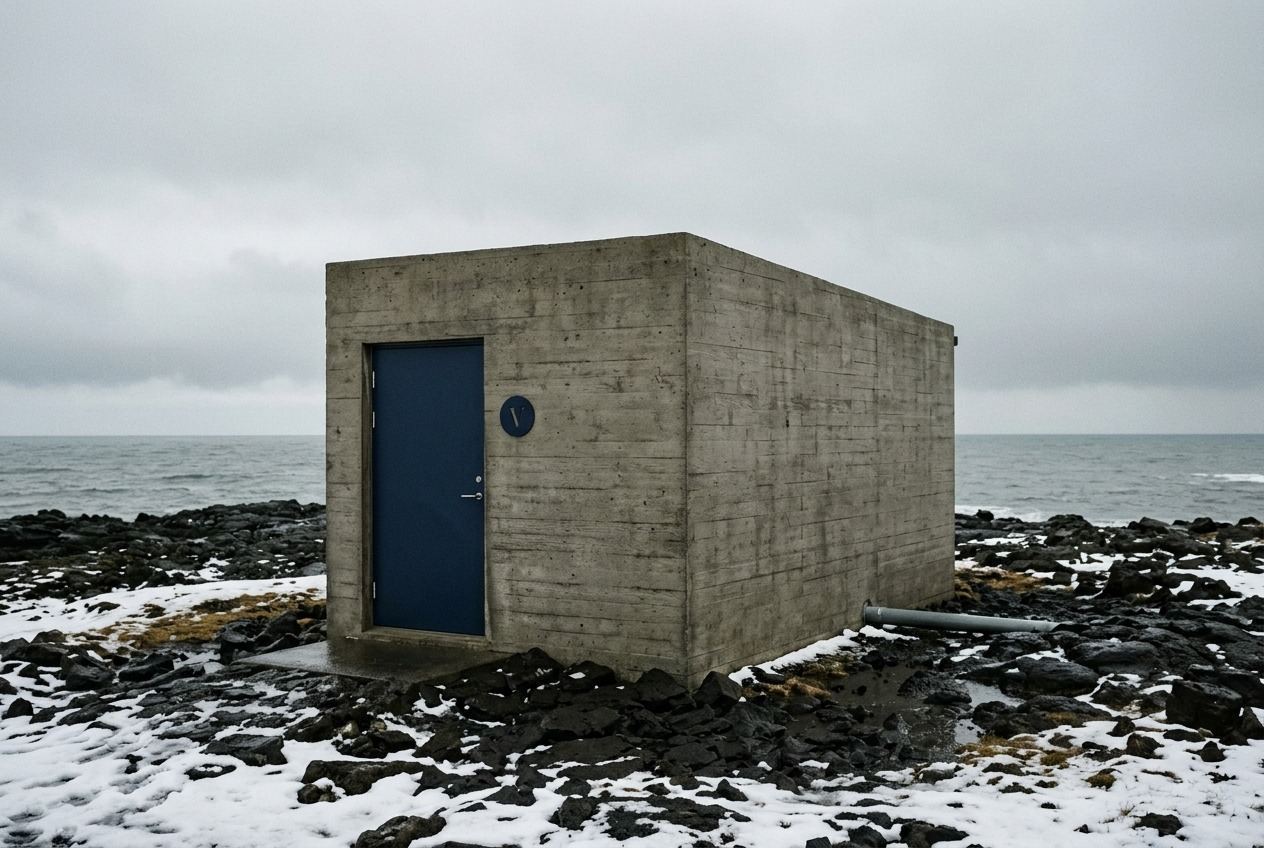
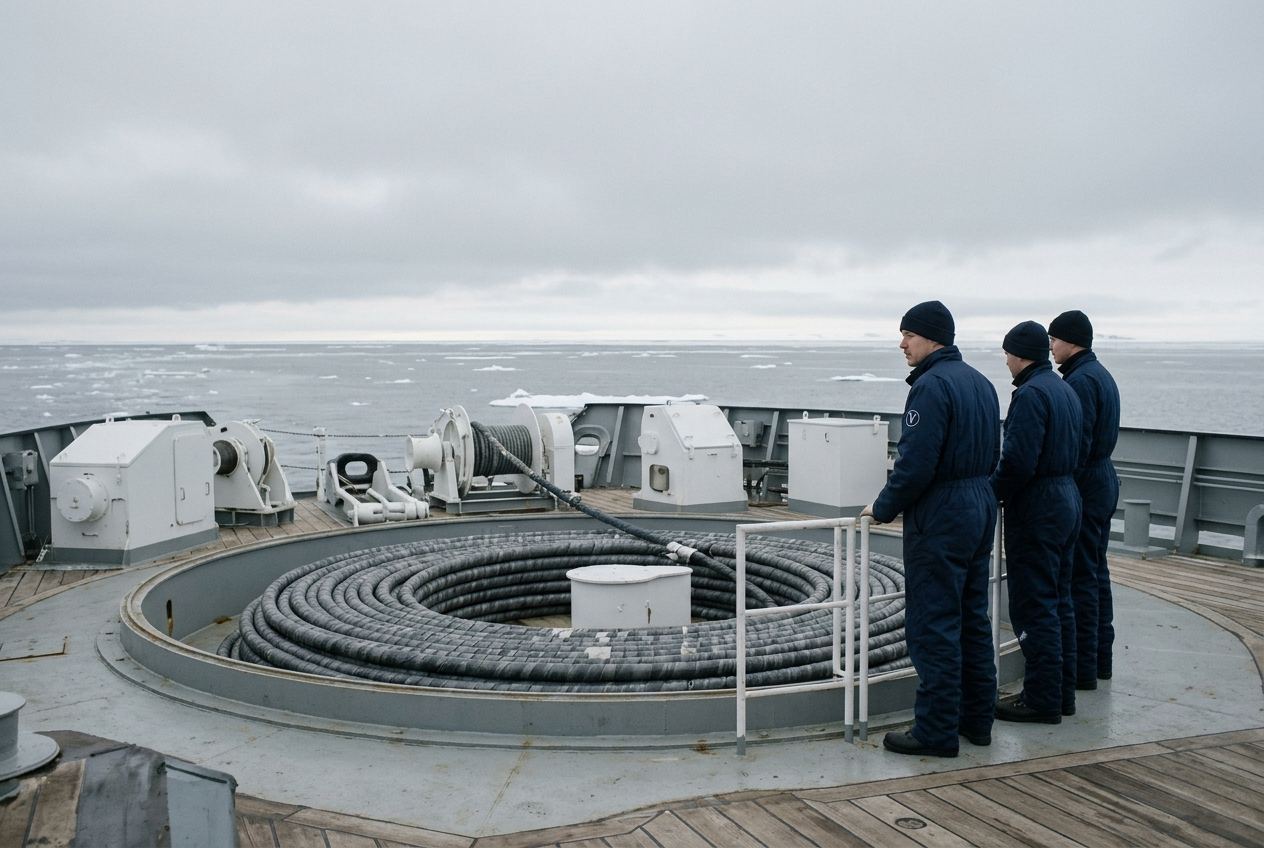
The Arctic leg runs from Reykjavik to Tokyo beneath the Northwest Passage. It was laid across two summer seasons, took a fifth of its schedule in weather holds, and entered service this month. It takes forty-one milliseconds off the Reykjavik-Tokyo path and gives the Nordic and Japanese deployments a second independent route.
The network as drawn in 2024 is now the network that exists, and the next capital that goes into it renews the oldest legs.
What the substrate carried last year
In the twelve months to December the substrate carried civil registration, judicial listing, benefit assessment and disbursement, public works and permitting, dispatch and mutual aid, and defence logistics and readiness coordination across the signatory nations, under the command of the force, the court or the authority concerned in each.
The number we watch is the count of decisions an institution can account for afterwards, and the target is every one of them. Every assessment, listing or allocation the substrate contributes to carries the record of what rule was applied and when, written where the institution reads it and holds the only right to amend it. Fourteen requests to amend a historical record were received last year, and each was referred to the institution's own correction procedure.
Enquiries about accession
Accession enquiries from governments are handled by the Unity programme office and are answered in writing. Instruments with governments are on the public register of the signatory concerned. The mandate framework and the residency provisions are set out under governance and oversight.