Sustainability
Energy, materials and communities.
Continuous industrial loads, recovered materials, locally trained maintenance, and measurements published as they are.
Refurbish before replace
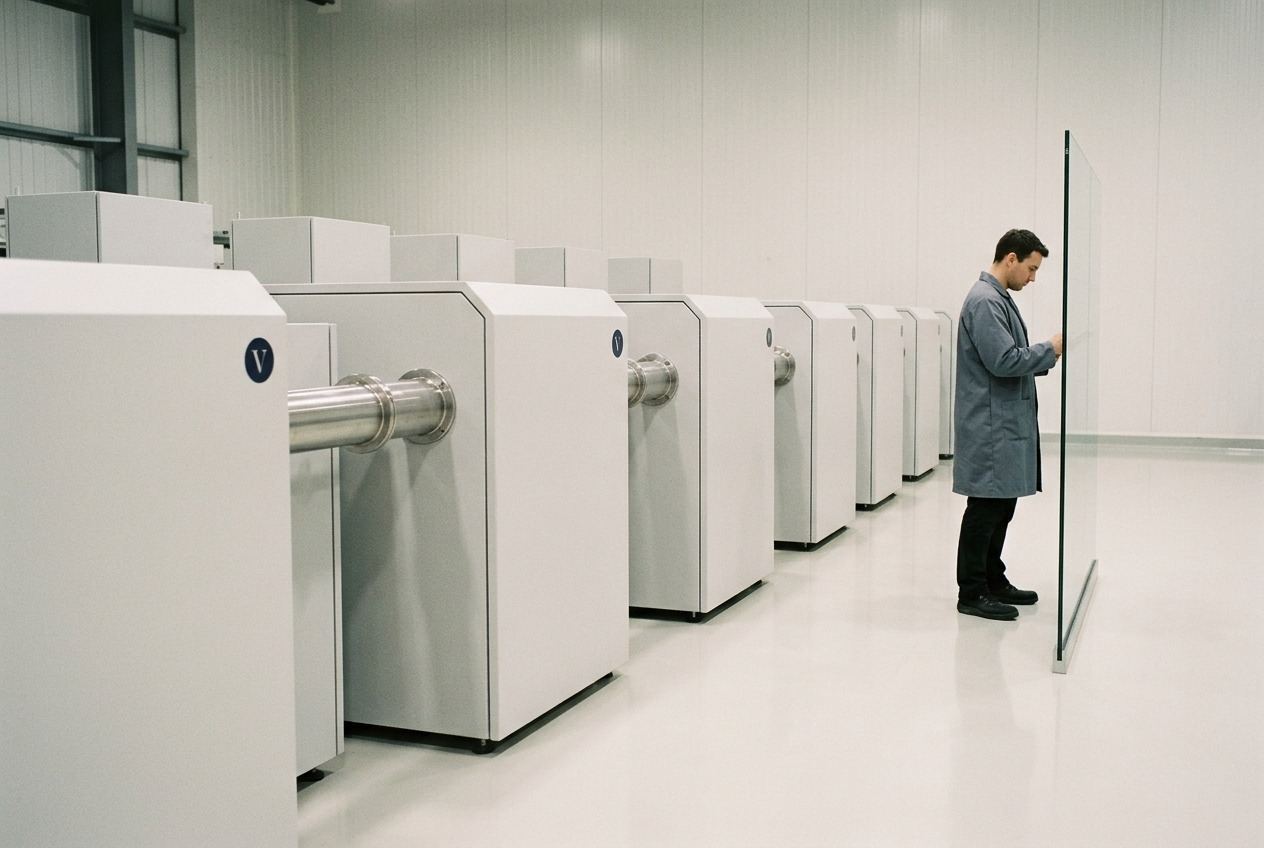
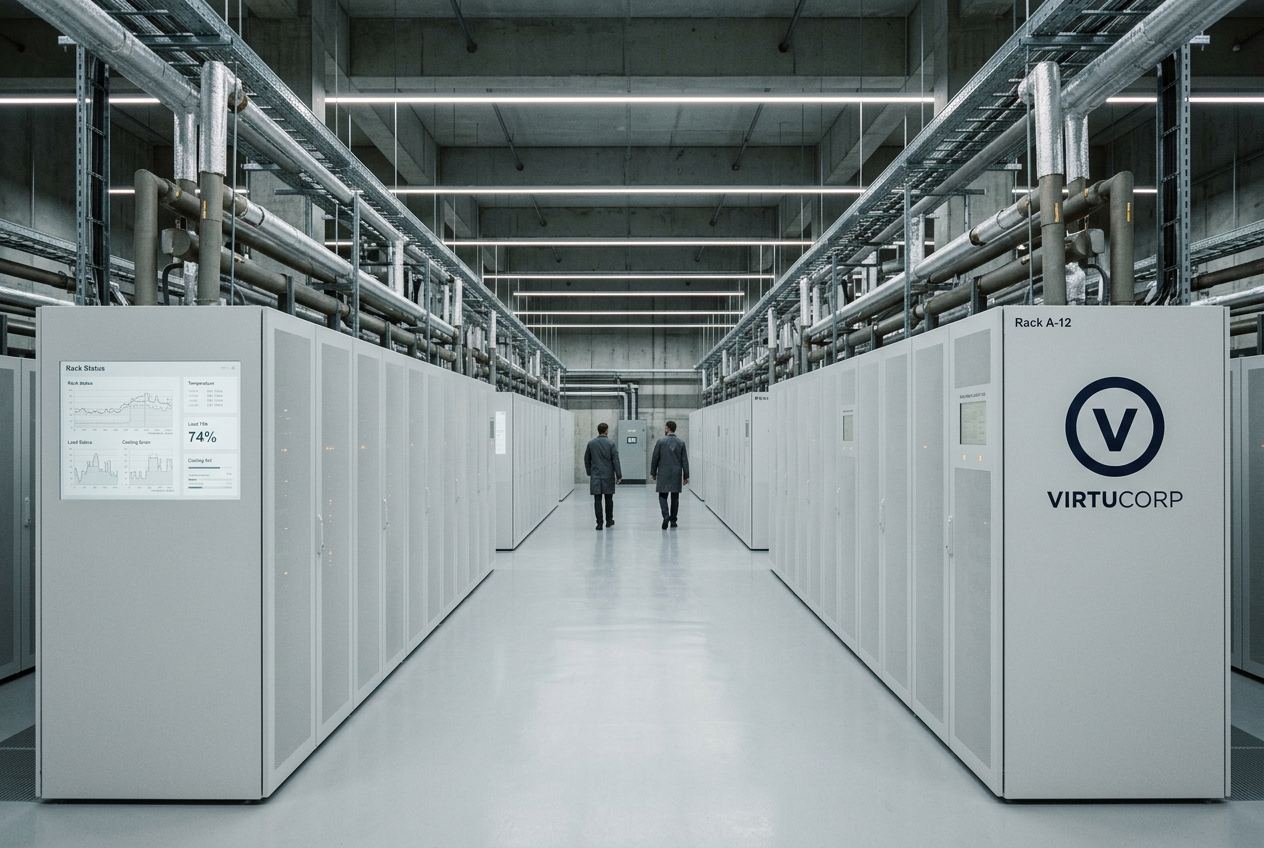
Cultivation halls and coordination facilities are continuous industrial loads: they run at a steady draw around the clock. We contract power on long-term terms, match new load to new generation, and report the figures in the environmental return as they are measured.
Every measure in the current return is published with its reason and the date of its next review.
Equipment specified for four decades is built once and kept working. The lowest-emission installation is usually the one still in service, and most of the reduction we report comes from refurbishment and recovery.
What is running now
Cultivation and coordination load is contracted on long-term terms, with new capacity matched to new generation. Process water is recovered and reused within each site, and discharge volumes and quality are in the environmental return.
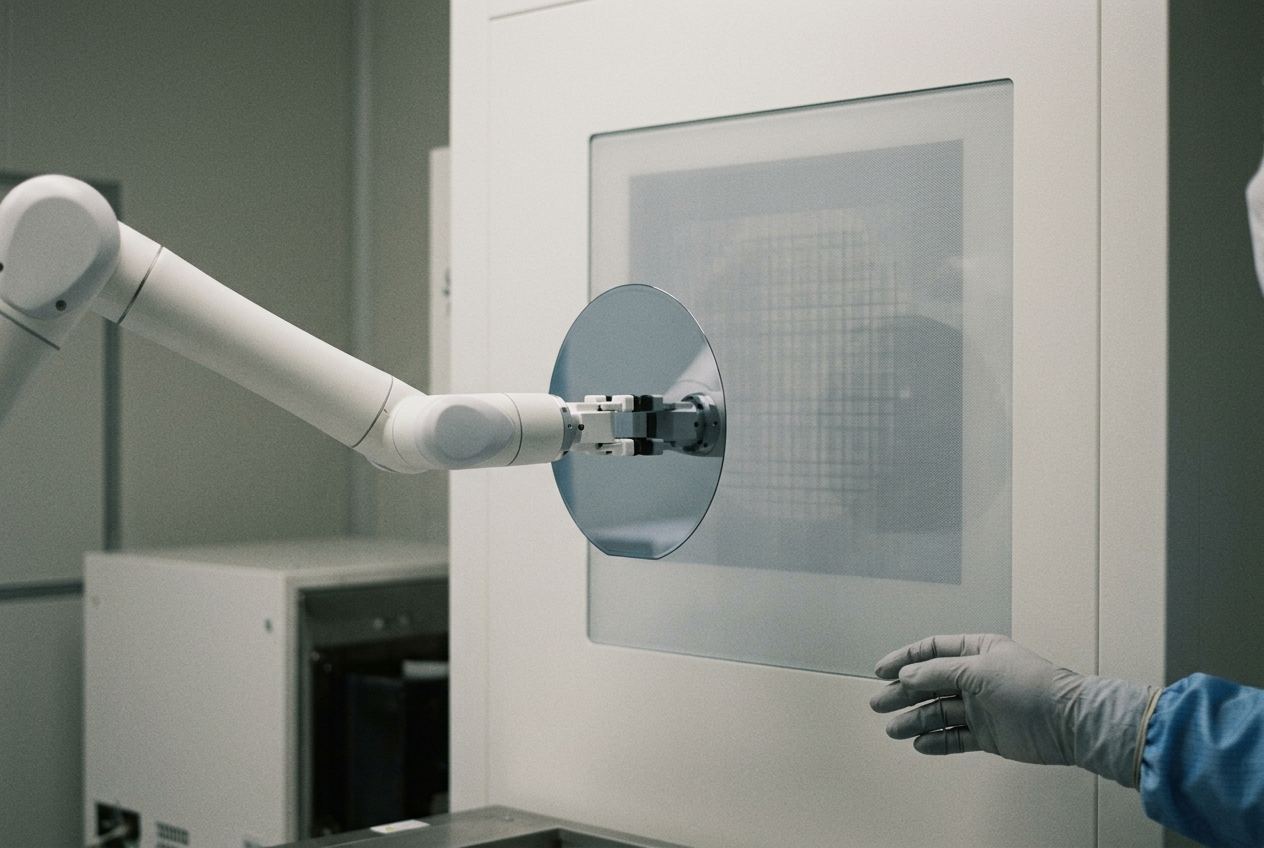
Material is taken out of our own returned equipment and requalified to primary specification before it is used again; yields are reported in the same return. Sites taken out of service are restored under agreement with the landowner, and the restoration is inspected after handover.
Each site trains the people who will maintain it, with intake recruited locally and the certification record published in the site's annual return; apprenticeships are open at every operating site. Community investment inside a site's operating boundary is decided by panels drawn from that community.
On site