Unity · Statement · January 2028
Kanton Zürich completes the migration of civil registration, and the counters open on the old hours with the same staff behind them.
One hundred and sixty communes, thirteen regional civil-status offices, 1.6 million residents and a continuous register running back to 1876. The cutover was taken on 2 January, in a scheduled eleven-hour read-only window, by the canton's own staff.
What was migrated
The canton's civil-status function is now carried on Unity in full: births, deaths, marriages, registered partnerships, recognitions and adoptions, declarations of name, and the cantonal residence and identity record that the communes maintain against it. Six million four hundred thousand record entries moved, of which two million nine hundred thousand are historical entries transcribed by the canton itself between 2019 and 2026, the oldest of them from 1876, when civil registration began in Switzerland.
Forty-one thousand cases were in flight on the day: notifications not yet registered, name declarations under objection, marriage preparations with documents outstanding. Cases in flight are the hard part of a registry migration and the reason the work took fourteen months. Each one carries a procedural position, and each arrived intact, so a clerk picks it up where it was left.
The federal interface is unchanged: the canton reports to the national register in the same format and on the same cadence as before.
How the cutover was run
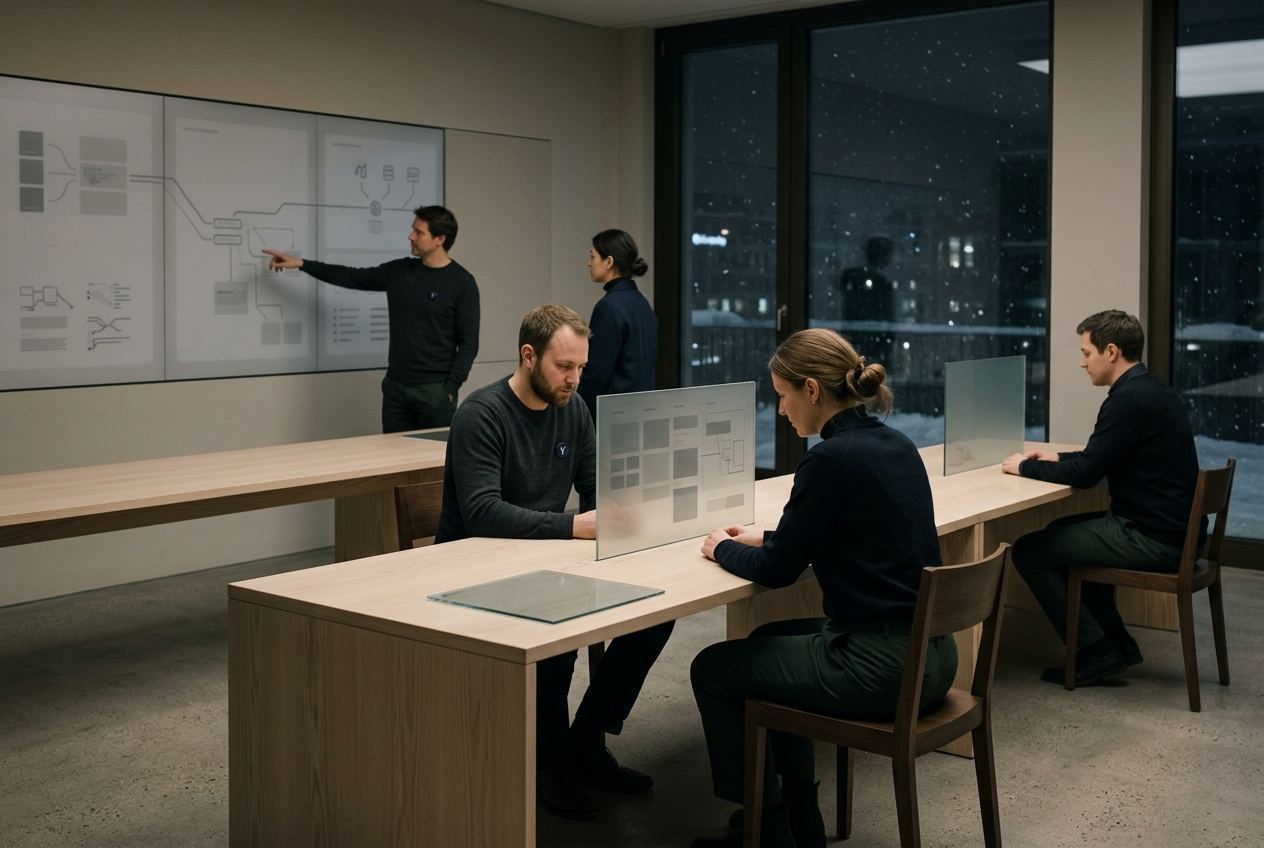
Dual running lasted fourteen months. The canton's existing register stayed authoritative throughout; Unity carried the same transactions in parallel and was reconciled against it nightly, and the reconciliation had to come back clean for sixty consecutive days before a cutover date could be proposed. It ran clean from June, and the handling of a rare form of name declaration was reworked in September, which moved the date on by three months.
The switch itself was rehearsed four times, twice with a fault injected without warning by the canton's own audit office. The third rehearsal took the hardest case, a partial reconciliation record, and was run again a fortnight later to confirm the fix.
On the day, the register was read-only for eleven hours across a Sunday, and every counter opened on its scheduled hour. The staff who performed the switch were cantonal employees, and our people were in the room to answer questions. The canton asked for it that way and held the authority throughout.
The correction at the counters
One correction was made in public. An index rebuilt after the switch sorted about one thousand nine hundred names carrying diacritics and the Swiss double-s in a different order, so a counter search on those names took a second form. A clerk in Winterthur raised it within two hours of opening and the correction was in place twenty-six hours later. It was ours to make.
The canton published the correction, with its own count and its own timeline, before we had finished writing ours. Forty-one enquiries were logged at the counters in the first week, thirty of them about queueing on the Monday, which is an ordinary Monday in a registry office in January. The canton's data protection officer reviewed the migration record and made two observations on our internal documentation, both closed since.
Who holds what
The mandate is the canton's. It sets residency, retention, priority and every rule the function runs under, and cantonal law decides how long anything is kept. The record is held in Switzerland, on the Oerlikon node, and is processed inside the country in normal running and in failover alike; the instrument carries that as a term.
The cantonal audit office and the data protection officer read the record directly, at their own initiative, and the sampling is theirs. The exit provision runs to ninety days, in a documented format named in the instrument, with the migration cost apportioned in advance. We are the supplier and the maintainer. Civil status in the canton is the canton's to decide, hold and interpret.
Where the record is published
The canton publishes its own migration report, its enquiry figures and its audit observations, on its own site and on its own authority. Questions about civil status, appointments or documents go to the commune or the regional office concerned; questions about the substrate are answered in writing by the Unity programme office through general enquiries.