X2 · Statement · January 2028
A three-state river commission adopts the allocation formula X2 put to it, and the basin now has a rule for a dry year.
Nineteen years of dispute, two arbitrations, and a treaty that set shares for an average year and left the dry ones to negotiation. The formula was tabled in October, tested against thirty-eight recorded years, ratified in December and has been in force since the first of the year.
What was adopted
The basin is one river system across three states: six hundred and forty thousand square kilometres, seventy-one million people living inside it, four million one hundred thousand hectares under irrigation, two hydropower schemes on the middle reach and a delta fishery at the end of it. The 2009 treaty set each state's share of an average year and referred a dry year to negotiation between the three of them. The dispute that followed ran nineteen years and twice went to arbitration, in 2014 and in 2021; both awards restated the shares.
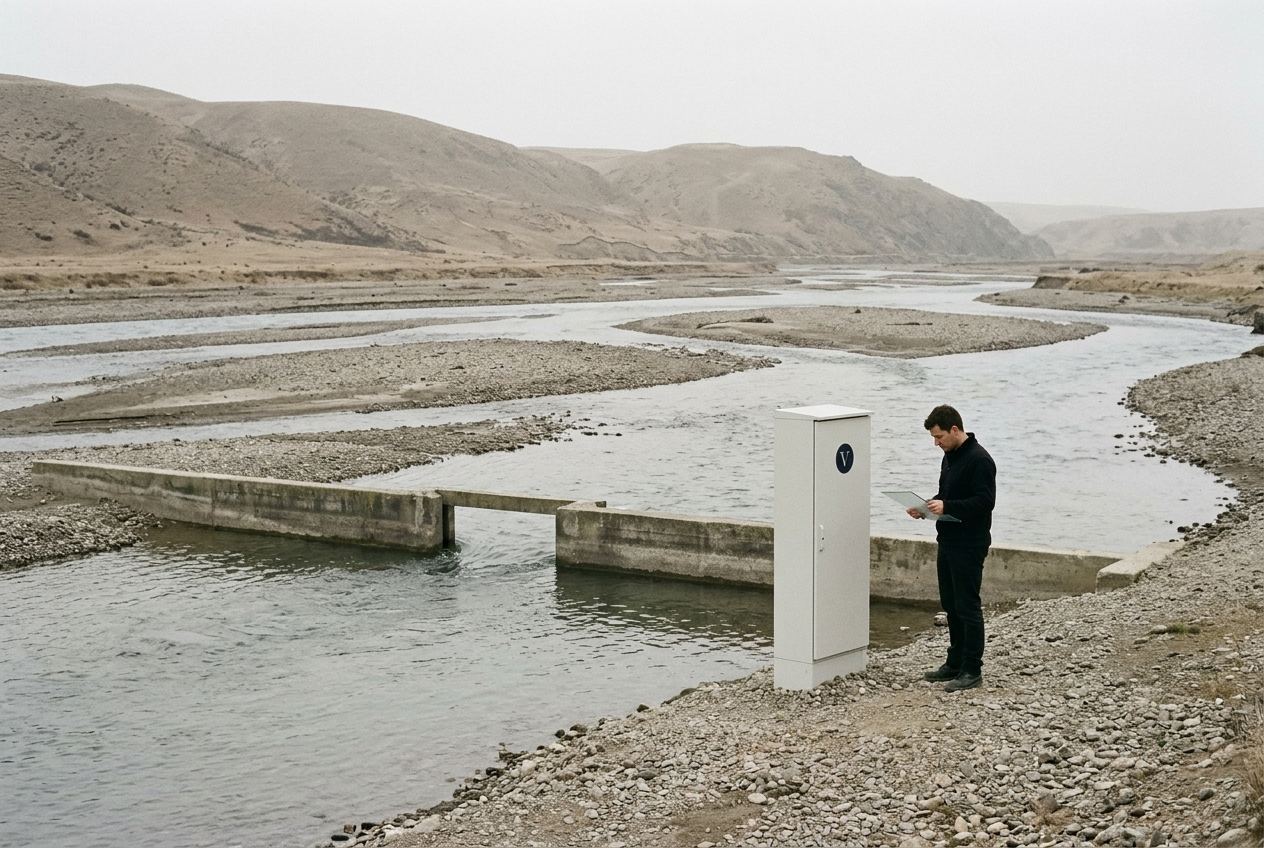
The formula replaces that negotiation with a reading. Allocations move on measured flow, at thresholds fixed in advance, taken from thirty-four gauging stations the commission already owns. Below the first threshold the upstream irrigation draw steps down and the hydropower head is held. Below the second, the delta's environmental flow takes precedence over both, and the two upstream states share the reduction in a ratio set in the text.
Each state accepts a smaller wet-year share than it had claimed, in exchange for a dry-year share it can count on. That was the trade available for nineteen years, and this is the first time it was put on paper as arithmetic.
How the formula was made
The commission put its own record to X2: thirty-eight years of gauge data, the treaty, both arbitral awards, the irrigation registers of the three states and the hydropower dispatch schedules. Sixty-two supervised hours across eleven weeks from August, logged to the commission's record in the commission's own format before they were logged to ours.
X2 returned a single formula and the reasoning behind it. The commission's technical committee then tested it against the thirty-eight recorded years and against four synthetic droughts more severe than anything in the record. Engineers from two of the three states spent five weeks looking for a better arrangement for their own state and reported to their ministers that the formula held.
Three cabinets ratified in December. The commission published the formula, the reasoning and the test results together, and recorded X2's contribution in its minutes.

What it changes
Since the first of the year the allocation is read off the gauges. Where a threshold is crossed, the allocation moves on the day the reading is confirmed and the three ministries are notified within the hour. Flow at the confluence stood above the first threshold at the turn of the year.
The commission holds the record and the gauge network reports into it under the commission's own mandate. The three governments hold the treaty, the thresholds and every decision taken against them. X2 advised, and the advice is on the commission's file with the name of the officer who took it.
Notes for editors
The formula, the reasoning and the test results are published by the commission, which is the body that can answer for them. We answer questions about the engagement; the regime it was held under is set out in the supervised-access briefing, and media inquiries go through the newsroom.